

Introduction
A flat tire can happen anytime. You might be driving to work, heading out with friends, or even stuck on a quiet road. In that moment, not knowing how to change car tire can feel frustrating and stressful. But the good news is—you don’t need to be an expert to handle it.
Think of changing a tire like solving a simple problem step by step. You don’t rush. You follow a process. Once you understand it, the fear disappears. In fact, many drivers say the first time is the hardest, but after that, it becomes second nature.
Learning this skill also saves you time and money. Instead of waiting for help, you take control of the situation. It also gives you confidence, especially during emergencies.
The first thing you should do is stay calm and look for a safe place to stop. Don’t brake suddenly. Instead, slow down gradually and move your car to the side of the road. A flat, straight surface is always the best choice.
Avoid stopping on curves, hills, or busy traffic lanes. These areas increase the risk of accidents. If possible, find a parking lot or wide roadside space where you have room to work comfortably.
Turn on your hazard lights as soon as you stop. This signals other drivers that your car is not moving normally. It helps prevent accidents and gives you space to work without pressure.
At night, visibility becomes even more important. If you have reflective triangles or cones, place them behind your car. This adds an extra layer of safety and keeps you visible from a distance.
Step 2: Secure Your Vehicle
Once your car is parked, the next step is making sure it doesn’t move. Even a slight roll can be dangerous when the car is lifted. Start by pulling the emergency brake completely.
Next, place wheel chocks or heavy objects behind your tires. You can use bricks, stones, or even wooden blocks. This step is simple but very effective in keeping your car stable.
If your car is automatic, shift it into “Park.” For manual cars, put it in first gear. These small actions create multiple layers of safety and reduce risk.
Think of it like locking a door before leaving home. You are adding protection before starting the actual work. Skipping this step can lead to serious problems later.
Step 3: Gather Your Tools
Before you begin changing the tire, take a moment to gather all the tools you need. Most cars come with a basic kit that includes a jack, lug wrench, and spare tire. These are usually stored in the trunk.
Check your tools quickly to make sure everything is in good condition. A damaged jack or missing wrench can slow you down or make the process difficult.
Here’s a quick table to understand your tools:
| Tool | Use |
|---|---|
| Jack | To lift the car |
| Lug wrench | To loosen and tighten nuts |
| Spare tire | To replace the flat tire |
Having everything ready before starting saves time. It also prevents frustration because you won’t need to stop halfway to look for something.
Step 4: Loosen the Lug Nuts
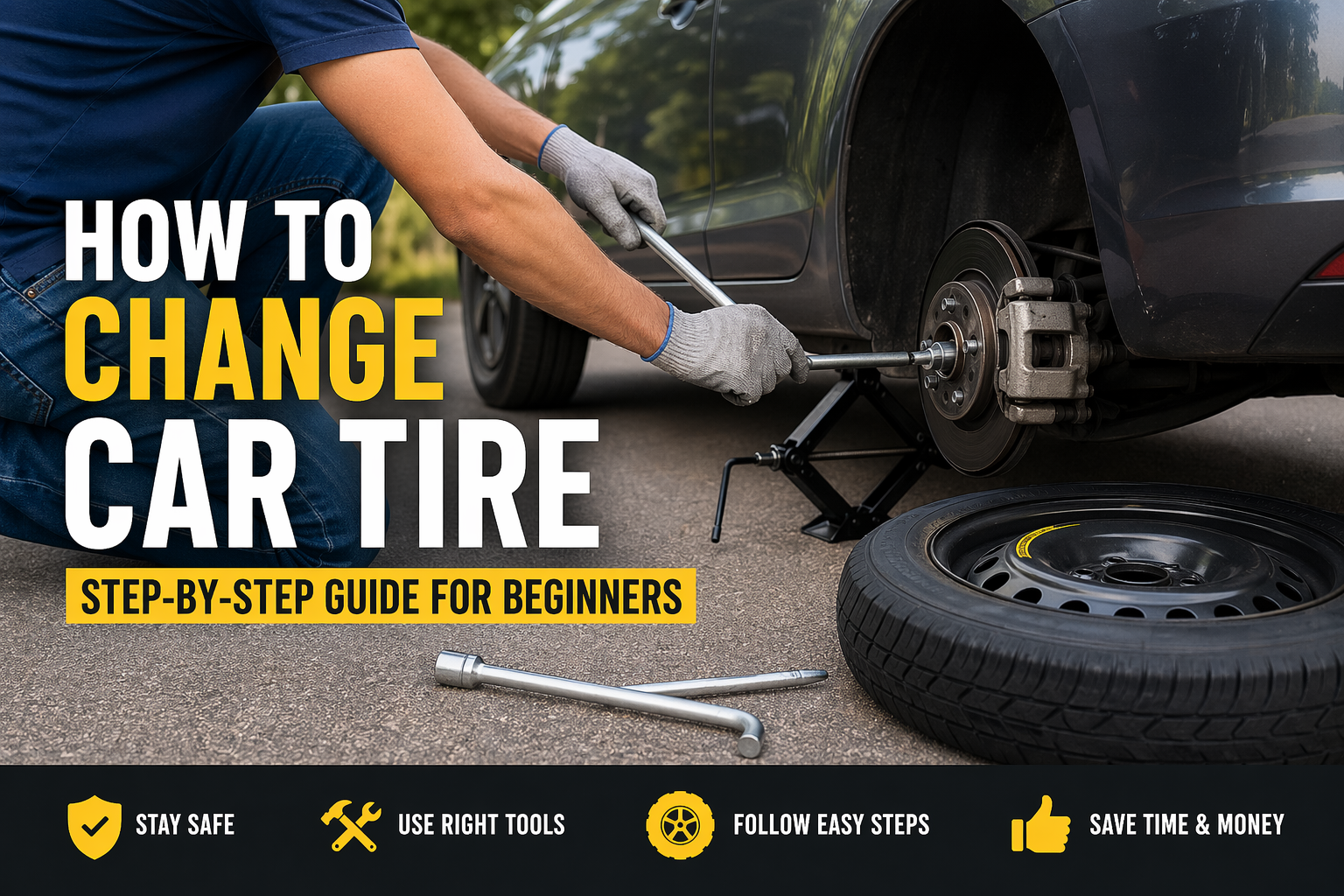
Now it’s time to slightly loosen lug nuts on the flat tire. Do this before lifting the car. This is important because the tire is still stable on the ground.
Turn the wrench counterclockwise to loosen each nut. You don’t need to remove them completely yet. Just break the tight grip so they become easier to remove later.
Sometimes, lug nuts can be very tight. In that case, use your body weight. Press down firmly with your foot if needed. It’s similar to opening a tight bottle cap—it requires a bit of force at first.
Be careful not to remove all nuts at this stage. Keeping them partially attached ensures the tire stays in place while you prepare for lifting.
Step 5: Lift the Car
Now use the jack to raise the vehicle. Place it under the correct lifting point, which is usually mentioned in your car manual. Using the wrong spot can damage your car.
Turn the jack slowly and steadily. As the car rises, keep an eye on its balance. The vehicle should remain stable and not tilt to one side.
Lift the car just enough so the flat tire is off the ground. You don’t need to raise it too high. Keeping it lower improves stability and safety.
If the car feels unstable at any point, stop immediately. Lower it and reposition the jack properly before continuing.
Step 6: Remove the Flat Tire
Now fully remove the loosened lug nuts. Keep them in a safe place, like a small container or your pocket, so they don’t roll away.
Once the nuts are off, pull the tire straight toward you. It should come off easily, but sometimes it might feel stuck due to dirt or rust.
If that happens, gently tap the tire or wiggle it side to side. Avoid using too much force. A little movement usually helps release it.
Place the flat tire flat on the ground. This prevents it from rolling and keeps your workspace organized.
Step 7: Install the Spare Tire
Take your spare tire and align it with the wheel bolts. Push it firmly into place until it sits properly on the hub.
Now put the lug nuts back on by hand. Tighten them lightly first. This ensures the tire is positioned correctly before applying full pressure.
Think of this step like placing a lid on a jar before tightening it. You want it aligned properly first.
Make sure the tire feels secure before moving to the next step. A loose fit can cause problems later.
Step 8: Lower the Car and Tighten
Slowly lower the car using the jack until the tire touches the ground. Once the car is stable, remove the jack completely.
Now fully tighten bolts using the wrench. Use a crisscross pattern instead of going in a circle. This ensures even pressure across the tire.
Apply firm pressure, but don’t over-tighten. The goal is to make the tire secure without damaging the bolts.
After tightening, double-check everything. A quick inspection ensures your safety before you start driving again.
Common Mistakes to Avoid
Many people make simple mistakes when changing a tire. One common error is lifting the car before loosening the nuts. This makes the tire spin and harder to handle.
Another mistake is skipping safety steps like using hazard lights or wheel blocks. These may seem small, but they play a big role in preventing accidents.
Some drivers also forget to tighten nuts properly. Loose bolts can cause the tire to wobble or even come off while driving.
Always take your time. Rushing increases the chances of mistakes. A careful approach ensures a safe and smooth process.
Pro Tips for Beginners
If you’re new, try practicing at home once. This helps you understand the process without pressure. It builds confidence for real situations.
Check your spare tire regularly. Many people forget this, and later find the spare is flat too. A quick monthly check can save you trouble.
Keep a flashlight and gloves in your car. These small items make a big difference, especially at night or in bad weather.
Lastly, stay calm. Confidence comes with practice. The more you understand the steps, the easier it becomes.
FAQs
1. How long does it take to change a car tire?
It usually takes 15 to 30 minutes. Beginners may take a bit longer, but that’s completely normal.
2. Can I drive long distances on a spare tire?
No, spare tires are temporary. Drive slowly and replace it with a proper tire as soon as possible.
3. What if my lug nuts won’t loosen?
Use more force carefully or stand on the wrench. If they still don’t move, seek professional help.
4. Is it safe to change a tire alone?
Yes, if you follow all safety steps. Always choose a safe location and stay alert.
5. Do all cars have spare tires?
Not always. Some cars come with repair kits instead. Check your vehicle beforehand.