
Introduction
Restoring classic cars is a passion for many enthusiasts, but finding rare and discontinued parts can be extremely difficult. Traditional manufacturing no longer produces many components needed for vintage vehicles.
This is where 3d classic car parts are changing the game.
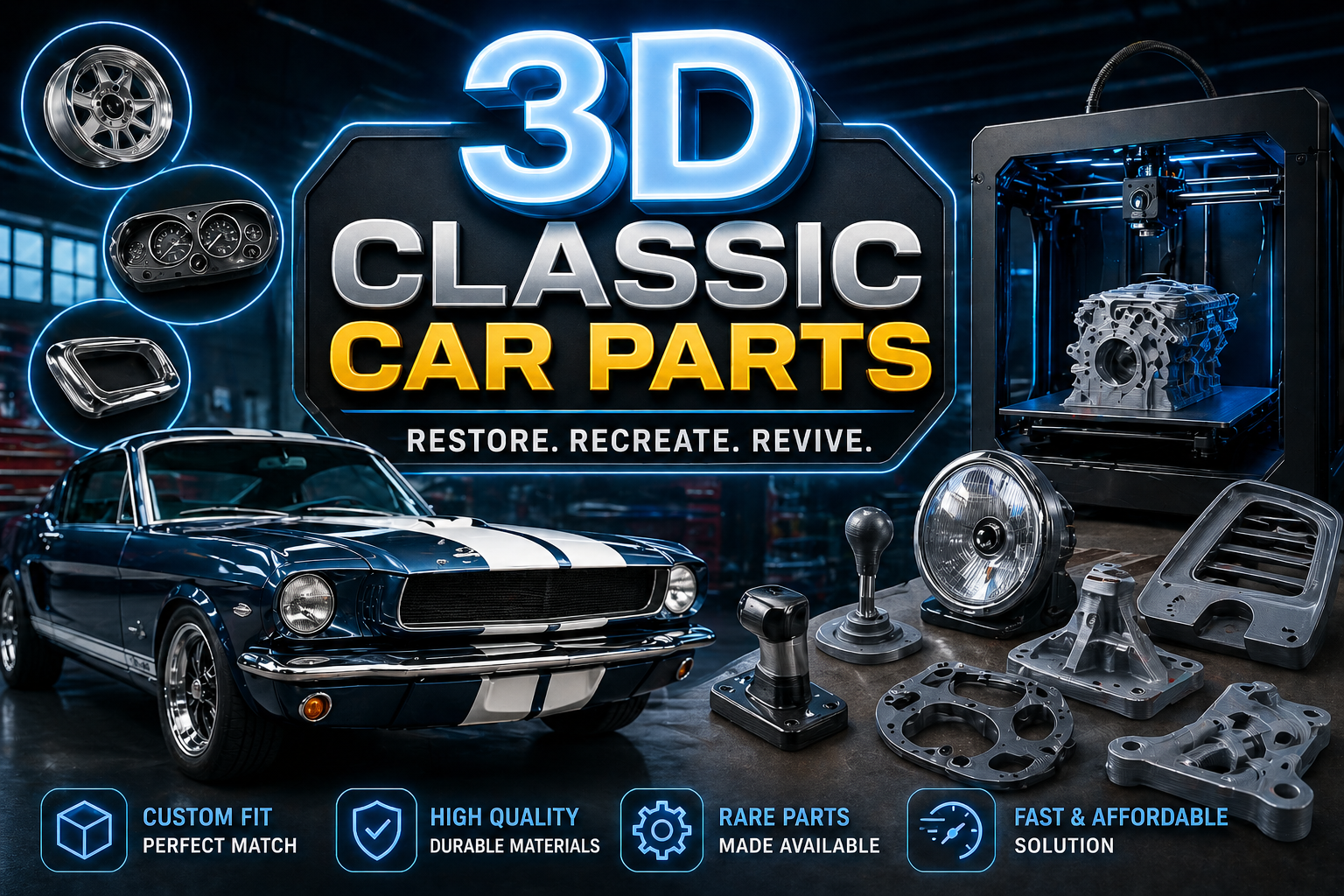
With modern 3D printing technology, car owners can now recreate old, rare, and custom parts with high precision. This innovation is making restoration easier, faster, and more affordable.
3D classic car parts are revolutionizing the way vintage cars are restored and maintained.
What Are 3D Classic Car Parts?
3D classic car parts are components created using 3D printing technology specifically for vintage or classic vehicles.
Instead of searching for rare parts, these components are digitally designed and printed using specialized machines.
They can include:
- Interior components
- Engine covers
- Decorative trims
- Custom accessories
This technology allows for accurate reproduction of parts that are no longer available in the market.
Why 3D Printing is Transforming Classic Car Restoration
Classic car restoration often faces one major problem: unavailable parts. 3D printing solves this issue by allowing users to recreate almost any component.
Key Reasons for Transformation
- Eliminates dependency on rare parts
- Reduces restoration time
- Allows custom modifications
- Supports small-batch production
How It Helps Enthusiasts
Restorers no longer need to search scrap yards or auctions for missing parts. Instead, they can simply design or download a model and print it.
This technology gives full control over the restoration process.
Types of 3D Classic Car Parts
3D printing can produce a wide variety of components for classic cars.
1. Interior Parts
These include:
- Dashboard components
- Knobs and switches
- Air vents
2. Exterior Parts
Examples:
- Badges and emblems
- Trim pieces
- Light covers
3. Mechanical Components
Some mechanical parts can also be printed depending on material strength.
- Brackets
- Mounts
- Covers
Not all parts are suitable for 3D printing, but many non-critical components can be easily recreated.
Benefits of Using 3D Classic Car Parts
3D printing offers several advantages for car restoration projects.
Major Benefits
- Cost-effective production
- Custom design flexibility
- Fast manufacturing process
- Easy replacement of rare parts
Why It’s a Game-Changer
Traditional manufacturing requires molds and mass production, which is not practical for rare parts.
3D printing allows you to create exactly what you need, when you need it.
Materials Used in 3D Printed Car Parts
The quality of 3D classic car parts depends heavily on the materials used.
Common Materials
- Plastic (PLA, ABS)
- Nylon
- Resin
- Metal (advanced printing)
Choosing the Right Material
- Use plastic for interior parts
- Use stronger materials for functional components
- Consider heat resistance for engine-related parts
Material selection directly affects durability and performance.
How to Create 3D Classic Car Parts
Creating 3D printed parts involves several steps.
Step-by-Step Process
- Design the part using CAD software
- Convert the design into a printable file
- Select material and printer settings
- Print the part
- Finish and install
Tools You May Need
- 3D modeling software
- 3D printer
- Scanning tools (optional)
Even beginners can start with simple designs and improve over time.
Challenges and Limitations
While 3D printing is powerful, it has some limitations.
Common Challenges
- Limited strength for some parts
- High cost of advanced printers
- Requires technical knowledge
- Not suitable for all engine components
Things to Keep in Mind
Some critical safety parts should always be sourced from trusted manufacturers.
3D printing is best used for non-critical or custom components.
Tips for Using 3D Classic Car Parts
To get the best results, follow these tips:
Best Practices
- Use high-quality designs
- Choose the right material
- Test parts before installation
- Work with experienced designers if needed
Pro Tips
- Start with simple parts
- Use online design libraries
- Upgrade materials for durability
Proper planning ensures better results and longer-lasting parts.
Common Mistakes to Avoid
Avoid these common errors:
- Using weak materials for important parts
- Skipping testing before installation
- Ignoring design accuracy
- Choosing low-quality printers
- Not considering heat resistance
Quick Checklist
- ✔ Correct design
- ✔ Strong material
- ✔ Proper testing
- ✔ Safe installation
Frequently Asked Questions (FAQ)
1. What are 3D classic car parts?
They are car components created using 3D printing technology for vintage vehicles.
2. Are 3D printed parts durable?
Yes, but durability depends on the material used and the type of part.
3. Can I print engine parts?
Some non-critical engine parts can be printed, but critical components should be professionally manufactured.
4. Is 3D printing expensive?
Initial setup can be costly, but it becomes affordable for multiple parts.
5. Where can I find 3D designs for car parts?
You can find designs online or create custom ones using CAD software.
Conclusion
The rise of 3d classic car parts is transforming how vintage vehicles are restored and maintained. This technology provides a practical solution for sourcing rare components and allows enthusiasts to customize their cars like never before.
While there are some limitations, the benefits far outweigh the challenges when used correctly.