

Introduction
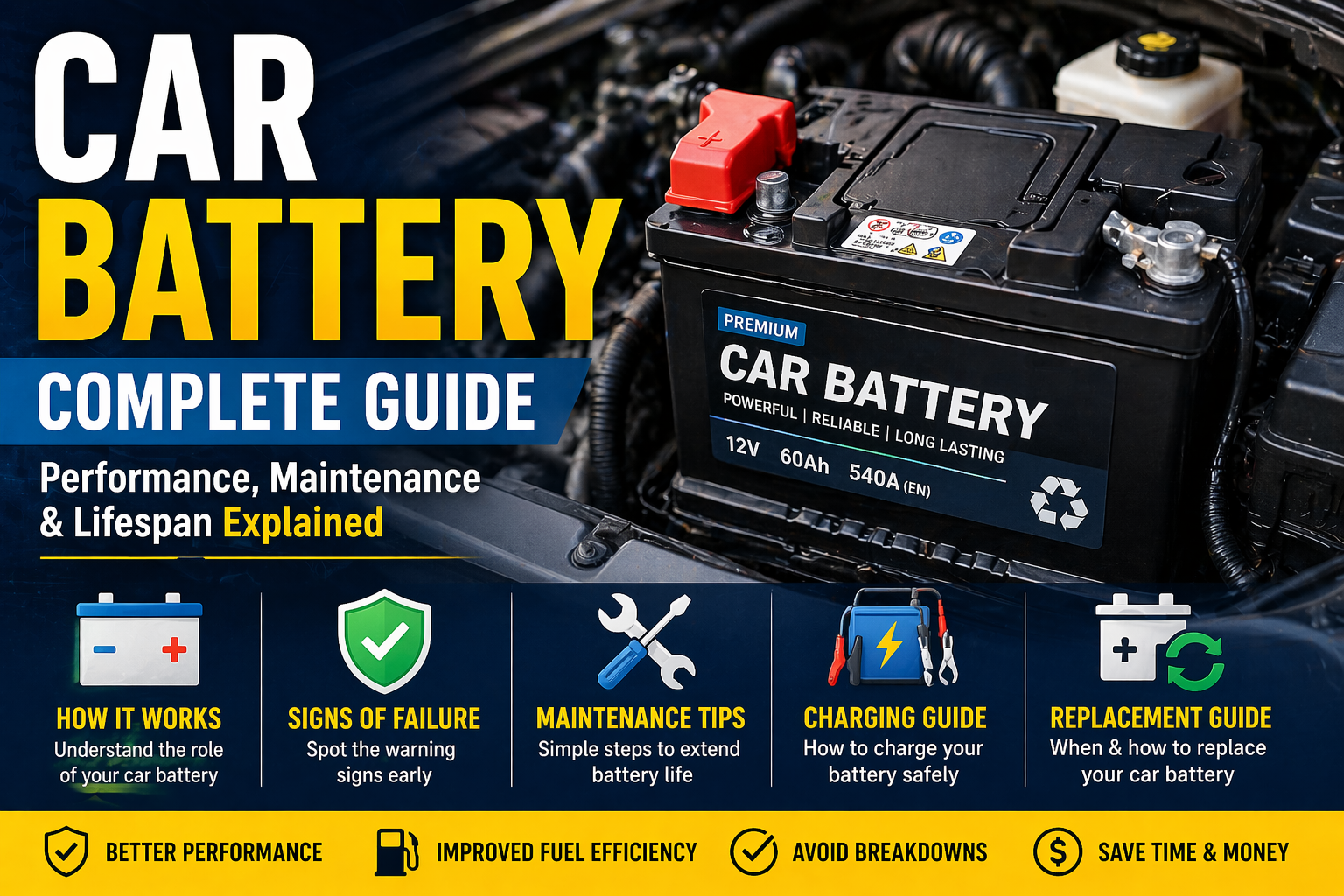
Your car battery is one of the most important parts of your vehicle. Without it, your car simply won’t start. It powers everything—from the engine to the lights and electronics.
Think of it like your phone battery. When it’s full, everything works smoothly. When it’s weak, performance drops. The same happens with your car.
Many drivers ignore battery care until something goes wrong. Suddenly, the car won’t start, and you’re stuck. This situation is frustrating and avoidable.
In this guide, you’ll learn everything about your battery. From how it works to how to maintain it, you’ll gain the confidence to handle it easily.
How a Car Battery Works
Your automotive battery stores electrical energy and delivers it when needed. When you turn the key, it sends power to the starter motor. This action starts the engine quickly and efficiently.
Once the engine starts, the alternator takes over. It keeps the battery charged and powers the car’s systems. This includes lights, radio, and other electronics.
Inside the battery, chemical reactions create electricity. This process produces a stable battery voltage that your car relies on. Without this, nothing would function properly.
Think of it like a water tank. The battery stores energy, and the alternator refills it. Together, they keep your car running smoothly.
Types of Car Batteries
Not all batteries are the same. The most common type is the lead acid battery. It’s affordable and works well for most vehicles.
Another popular option is the AGM battery. It lasts longer and performs better in extreme conditions. It’s often used in modern cars with advanced features.
A newer option is the lithium car battery. These are lightweight and highly efficient. However, they are more expensive and mostly used in electric vehicles.
Choosing the right battery type depends on your car and usage. Always check your manual before buying a new one.
Car Battery Lifespan
Most batteries last between 3 to 5 years. However, many factors affect battery lifespan. Weather is one of the biggest factors. Extreme heat or cold can shorten battery life.
Driving habits also matter. Short trips don’t allow the battery to fully charge. This leads to faster wear and reduced performance.
Regular maintenance can extend life. Checking voltage level and keeping connections clean helps a lot.
Think of it like exercise. Regular care keeps your battery strong and reliable for a longer time.
Signs of a Bad Car Battery
A failing battery often gives warning signs. One common sign is a slow crank when starting the engine. It means the battery is struggling to provide power.
You may also notice dim headlights or flickering lights. This indicates weak electrical output.
Another sign is frequent need for jump-starts. This shows the battery cannot hold charge properly.
Ignoring these signs can leave you stranded. Replacing your battery early prevents bigger problems.
Car Battery Maintenance Tips
Maintaining your battery maintenance routine is simple but important. Start by checking terminals regularly. Clean any corrosion to ensure proper connections.
Avoid leaving lights or electronics on. This causes battery drain and reduces lifespan.
Drive your car regularly. This keeps the battery charged and active.
A little care goes a long way. Simple habits can save you from unexpected breakdowns.
Charging and Replacing a Battery
Sometimes your battery just needs charging. A proper battery charging system helps restore power and improve performance.
If charging doesn’t work, replacement is necessary. Always choose the correct size and capacity for your car.
Here’s a quick comparison:
| Situation | Action |
|---|---|
| Weak battery | Recharge |
| Old battery | Replace |
| Frequent issues | Inspect system |
Replacing on time ensures smooth performance and avoids emergencies.
Common Mistakes to Avoid
Many drivers ignore small issues. This leads to bigger problems later.
One mistake is neglecting maintenance. Skipping checks can damage the electrical system.
Another mistake is using the wrong battery type. This affects performance and safety.
Always follow proper care steps. It helps you avoid unnecessary costs and stress.
FAQs
1. How long does a car battery last?
Usually 3–5 years, depending on usage and conditions.
2. What causes battery drain?
Leaving lights on or not driving regularly can drain it.
3. How do I know my battery is bad?
Slow starts, dim lights, and frequent jump-starts are signs.
4. Can I replace a battery myself?
Yes, it’s simple if you follow safety steps.
5. What type of battery is best?
It depends on your car. AGM batteries are popular for modern vehicles.