
Introduction
If you’ve ever stood in front of a shelf full of engine oils wondering whether to buy 5W-30, 10W-40, or 0W-20, you’re not alone. The numbers on motor oil bottles can look confusing, especially if you’re not familiar with how engine oil works.
I remember changing the oil on my first car and buying the cheapest bottle because I thought “oil is oil.” A few months later, the engine became noticeably noisier during cold starts. After talking to an experienced mechanic, I realized I had chosen the wrong viscosity grade. That small mistake taught me how important engine oil viscosity really is.
Understanding an engine oil viscosity chart helps you choose the correct oil for your vehicle, improve engine performance, reduce wear, and even increase fuel efficiency. Whether you drive a small family car, an SUV, or a high-performance vehicle, selecting the proper oil viscosity can extend the life of your engine.
What Is Engine Oil Viscosity?
Engine oil viscosity simply refers to how thick or thin the oil is and how easily it flows through your engine.
Thin oil flows quickly during cold starts, allowing engine components to receive lubrication immediately. Thick oil provides stronger protection under high temperatures and heavy engine loads.
Think of it like pouring water and honey. Water flows easily, while honey moves much more slowly. Engine oil behaves in a similar way depending on its viscosity rating and temperature.
Why viscosity matters
When your engine starts in the morning, oil needs to reach moving parts within seconds. If the oil is too thick, lubrication is delayed. On the other hand, if the oil is too thin during hot weather, it may not provide enough protection.
Understanding Engine Oil Viscosity Ratings
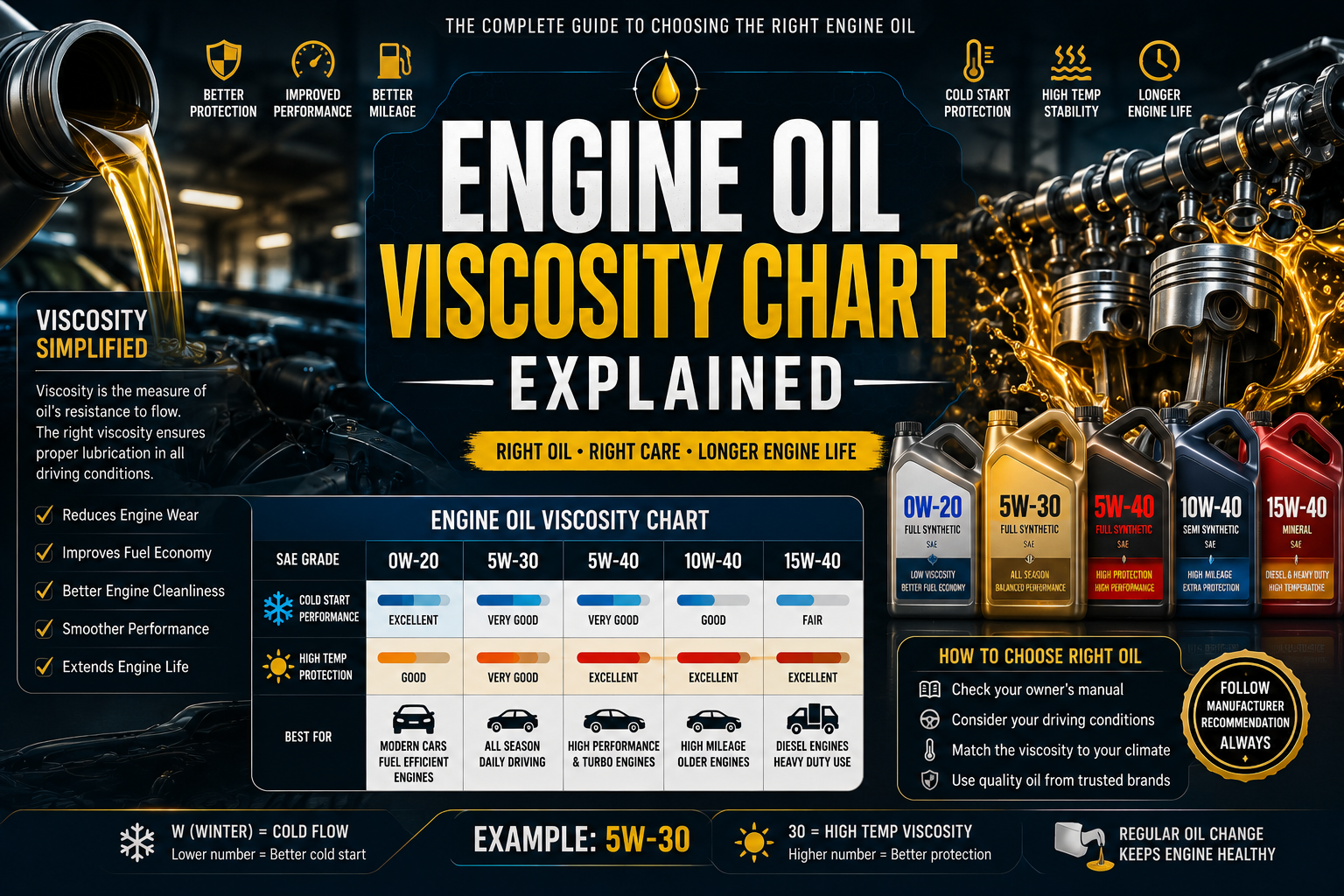
Most modern vehicles use multi-grade engine oils, which are identified by numbers such as:
- 0W-20
- 5W-30
- 5W-40
- 10W-30
- 10W-40
- 15W-40
At first glance, these numbers look technical, but they’re actually easy to understand.
What does the “W” mean?
The W stands for Winter.
The number before the W indicates how well the oil flows in cold temperatures.
Examples:
- 0W flows extremely well in freezing weather.
- 5W performs well during cold mornings.
- 10W is slightly thicker during startup.
Lower numbers provide faster lubrication during cold starts.
What does the second number mean?
The second number shows how thick the oil remains when the engine reaches normal operating temperature.
Examples:
- 20 = thinner hot oil
- 30 = medium viscosity
- 40 = thicker protection
- 50 = heavy-duty protection
The higher this number, the thicker the oil remains under high temperatures.
Single-Grade vs Multi-Grade Engine Oil
Many people don’t realize there are two basic types of engine oil viscosity.
Single-Grade Oil
Single-grade oils have only one viscosity rating, such as:
- SAE 30
- SAE 40
These oils are mainly used in older vehicles, lawn equipment, generators, and some industrial machinery.
They perform well within a limited temperature range but aren’t ideal for modern passenger vehicles.
Multi-Grade Oil
Multi-grade oils are far more common today.
Examples include:
- 0W-20
- 5W-30
- 5W-40
- 10W-40
These oils remain thin enough during cold starts while maintaining strong protection once the engine heats up.
That’s why almost every modern manufacturer recommends multi-grade oil.
How Temperature Affects Engine Oil Viscosity
Temperature has a significant effect on engine oil.
When it’s cold outside, oil naturally becomes thicker.
When the engine gets hot, oil becomes thinner.
This is why manufacturers recommend different viscosity grades depending on climate.
Cold Climate
Drivers living in snowy or freezing regions often benefit from:
- 0W-20
- 0W-30
- 5W-30
These oils circulate quickly immediately after startup.
Hot Climate
In warmer climates, thicker oils may provide better protection.
Popular choices include:
- 5W-40
- 10W-40
- 15W-40
These maintain a stronger lubricating film during high temperatures.
Mixed Climate
If you experience both hot summers and cold winters, 5W-30 is often one of the most balanced choices for many gasoline-powered vehicles.
Choosing the Right Engine Oil for Your Vehicle
The easiest way to select the correct oil is to follow your vehicle manufacturer’s recommendations.
Here are a few practical tips:
1. Read Your Owner’s Manual
The owner’s manual specifies the recommended viscosity grade for your engine.
2. Consider Your Driving Conditions
If you regularly tow heavy loads, drive in mountainous areas, or sit in heavy traffic, your engine may benefit from a different oil grade approved by the manufacturer.
3. Check the API and ACEA Ratings
In addition to viscosity, ensure the oil meets the correct quality standards for your vehicle.
4. Choose High-Quality Oil
Using reputable brands often provides better additives that reduce engine deposits, improve wear protection, and keep your engine cleaner over time.
Common Mistakes When Choosing Engine Oil
Choosing the right engine oil may seem simple, but many drivers make small mistakes that can affect engine performance over time. These errors often lead to increased wear, poor fuel economy, and expensive repairs.
One of the biggest mistakes is assuming that all engine oils are the same. While different oils may look similar, each viscosity grade is designed for specific engines and operating conditions. Using an oil that is too thick or too thin can reduce lubrication and increase engine wear.
Another common mistake is ignoring the recommendations in the owner’s manual. Manufacturers spend years testing their engines with specific oil grades, so following their advice is always the safest choice.
Avoid these common mistakes:
- Using the wrong viscosity grade
- Ignoring the manufacturer’s recommendations
- Mixing different oil grades unnecessarily
- Delaying regular oil changes
- Buying low-quality or counterfeit engine oil
- Forgetting to replace the oil filter during an oil change
Benefits of Using the Correct Engine Oil Viscosity
Using the correct viscosity isn’t just about following the owner’s manual—it offers real-world benefits that every driver can notice.
1. Better Engine Protection
The correct oil creates a protective layer between moving engine parts, reducing friction and preventing premature wear. This is especially important during cold starts when most engine wear occurs.
2. Improved Fuel Economy
Modern low-viscosity oils reduce internal engine resistance, allowing the engine to operate more efficiently. This can improve fuel economy and lower running costs.
3. Longer Engine Life
Clean, high-quality oil keeps internal components lubricated and helps prevent sludge buildup. Over time, this can significantly extend the life of your engine.
4. Better Cold Start Performance
Low-viscosity oils such as 0W-20 and 5W-30 flow quickly during cold weather, helping the engine start smoothly and reducing wear.
5. Stable High-Temperature Performance
When driving in hot weather or under heavy loads, the correct viscosity maintains a strong lubricating film that protects engine components from excessive heat.
Engine Oil Maintenance Tips
Choosing the correct oil is only part of good vehicle maintenance. Proper care ensures your engine continues to perform at its best.
Follow these maintenance tips:
- Check your engine oil level at least once a month.
- Replace engine oil according to the manufacturer’s recommended service interval.
- Always change the oil filter with every oil change.
- Look for oil leaks around the engine and fix them promptly.
- Use high-quality engine oil from trusted brands.
- Monitor your dashboard oil warning light.
- Keep a record of every oil change.
Simple Oil Maintenance Checklist
- Check oil level.
- Inspect oil color.
- Replace oil filter.
- Use the recommended viscosity.
- Follow scheduled maintenance.
Regular maintenance helps improve engine performance, increase fuel efficiency, and reduce unexpected breakdowns.
How to Read an Engine Oil Bottle
Many people only notice the viscosity number, but an engine oil bottle contains several important details.
Look for these labels:
- SAE Viscosity Grade (5W-30, 0W-20, etc.)
- API Certification
- ACEA Specification
- Synthetic or Conventional
- Vehicle Compatibility
These specifications help ensure that the oil meets your vehicle manufacturer’s requirements.
If you’re unsure, compare the information on the bottle with your owner’s manual before purchasing.
Frequently Asked Questions (FAQ)
1. What does 5W-30 mean?
The “5W” indicates the oil’s performance in cold temperatures, while “30” represents its viscosity when the engine reaches normal operating temperature.
2. Can I use 10W-40 instead of 5W-30?
Only if your vehicle manufacturer specifically approves it. Using a different viscosity without approval may reduce engine performance and increase wear.
3. Which engine oil is best for hot weather?
Many vehicles perform well with 5W-40 or 10W-40 in warmer climates, but always follow your owner’s manual.
4. Is synthetic engine oil better than conventional oil?
Synthetic oil generally offers better protection, improved performance at extreme temperatures, and longer service intervals. However, use the type recommended by your vehicle manufacturer.
5. How often should engine oil be changed?
This depends on your vehicle, driving conditions, and the type of oil used. Many modern vehicles require an oil change every 5,000 to 10,000 miles (8,000–16,000 km), but always check the maintenance schedule in your owner’s manual.
Conclusion
Understanding an engine oil viscosity chart isn’t as complicated as it first appears. Once you know what the numbers mean, choosing the correct oil becomes much easier.
The right engine oil improves lubrication, protects against wear, enhances fuel efficiency, and helps your engine perform reliably in both hot and cold conditions.
Whether you drive a compact car, SUV, pickup truck, or luxury vehicle, following the manufacturer’s recommendations and using the correct viscosity grade is one of the best investments you can make in your vehicle’s health.