
Introduction
Washing your car should not feel like a chore. Yet, many people spend too much money or time on it. That is where a self service car wash comes in. It gives you control, saves money, and delivers great results. Let’s explore how it works and why it might be perfect for you.
What Is a Self Service Car Wash?
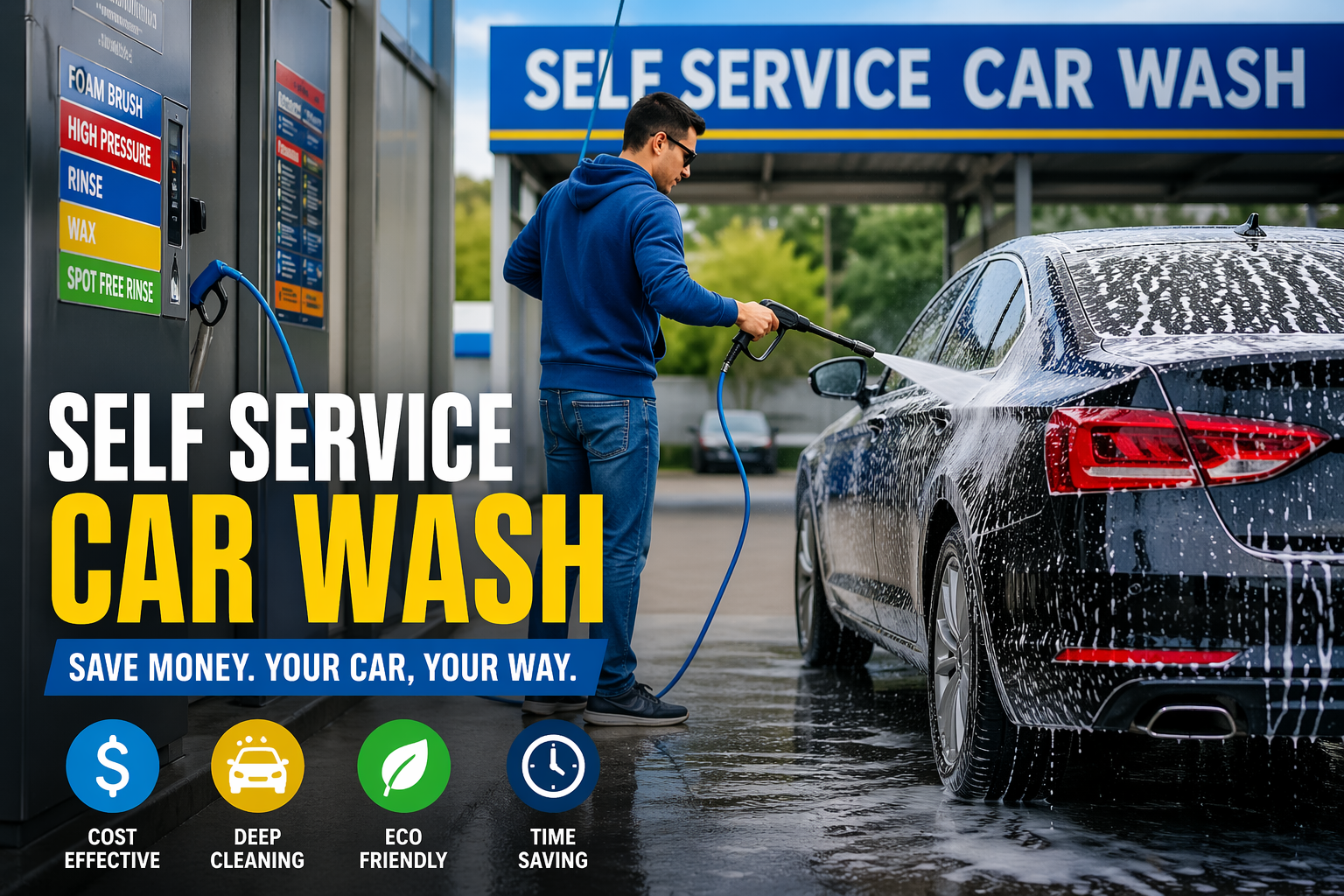
A self service car wash is a place where you clean your car using professional tools. You pay for time and use equipment like pressure washer car wash systems and foam brushes. This setup gives you full control over the cleaning process and results.
It feels like having your own garage setup without buying tools. For example, if your car only needs a quick rinse, you can finish in minutes. This flexibility makes it a practical solution for everyday drivers.
How It Works
You arrive, choose a bay, and pay using coins or a card. Then you select options like soap, rinse, or wax. Each step helps improve vehicle care and ensures your car looks fresh and clean.
Benefits of Using a Self Service Car Wash
A self service car wash is popular because it offers strong advantages. First, it is a cheap car wash option. You only pay for the time you use, which means better cost control.
Second, it provides convenience. You can wash your car anytime without waiting. Finally, it delivers satisfaction. You control every step, which improves car maintenance and results.
Real-Life Example
Imagine your car covered in dust after a trip. Instead of paying a fixed fee, you spend 10 minutes cleaning only what is needed. That is true efficiency.
Equipment Used in Self Service Car Wash
Every car wash station includes essential tools. These tools make cleaning faster and easier. The most common one is a pressure washer car wash system that removes dirt quickly.
You will also find foam brushes and rinse systems. These tools improve cleaning tools performance and give better results.
Key Equipment
High-pressure hoses, foam guns, and dryers work together. This setup ensures proper vehicle care and reduces effort.
Eco-Friendly and Water Saving Benefits
Many people worry about water waste. However, a self service car wash often uses recycling systems. This makes it an eco friendly car wash option.
Compared to home washing, it uses less water. This supports sustainability and protects the environment.
Why It Matters
For example, washing at home can waste over 100 gallons. But a professional station controls usage, improving efficiency.
Self Service vs Automatic Car Wash
Choosing between automatic vs self service depends on your needs. Automatic washes are quick but less precise. A manual car wash gives better control.
If you care about paint safety, self-service is better. It allows gentle cleaning and avoids scratches.
Simple Comparison
| Feature | Self Service | Automatic |
|---|---|---|
| Cost | Low | Medium |
| Control | High | Low |
| Quality | Custom | Standard |
Tips for Best Results
To get the most from a self service car wash, follow simple steps. Start with a rinse, then apply foam, and finish with a clean rinse.
Avoid rushing. Take your time to improve vehicle care and results.
Pro Tip
Focus on dirty areas first. This improves efficiency and saves money.
FAQs
1. Is a self service car wash cheaper?
Yes, it is usually a cheap car wash option because you pay only for time used.
2. Can I damage my car?
No, if you use tools properly. It allows gentle cleaning and better control.
3. How long does it take?
Most washes take 10–20 minutes depending on dirt level.
4. Is it better than home washing?
Yes, it saves water and supports eco friendly car wash practices.
5. Do I need to bring my own tools?
Usually no, but you can bring extras for better car maintenance.