
It Started With a Temperature Gauge I Thought I Could Ignore
A friend of mine once joked that dashboard warning lights were “just suggestions.” That joke didn’t last long.
During a summer road trip, the temperature gauge on his sedan slowly crept toward the red zone. The car still seemed to drive normally, so he figured he could make it home before checking it out. Ten miles later, steam started pouring from under the hood, and the engine shut itself down.
What could have been a simple coolant leak turned into a major repair involving the radiator, thermostat, and even part of the engine.
That experience was a reminder that a vehicle’s cooling system is one of the most important—and often overlooked—parts of a car. Once it fails, the damage can happen surprisingly fast.
If you’ve noticed your engine running hotter than usual, coolant on the driveway, or steam under the hood, don’t ignore it. Understanding how cooling system repair works can save you thousands of dollars and keep your vehicle running reliably.
What Does a Car Cooling System Do?
Your engine generates an incredible amount of heat every time you drive. Without a properly working cooling system, that heat would quickly damage critical engine components.
The cooling system keeps the engine operating within its ideal temperature range by circulating coolant through the engine and radiator.
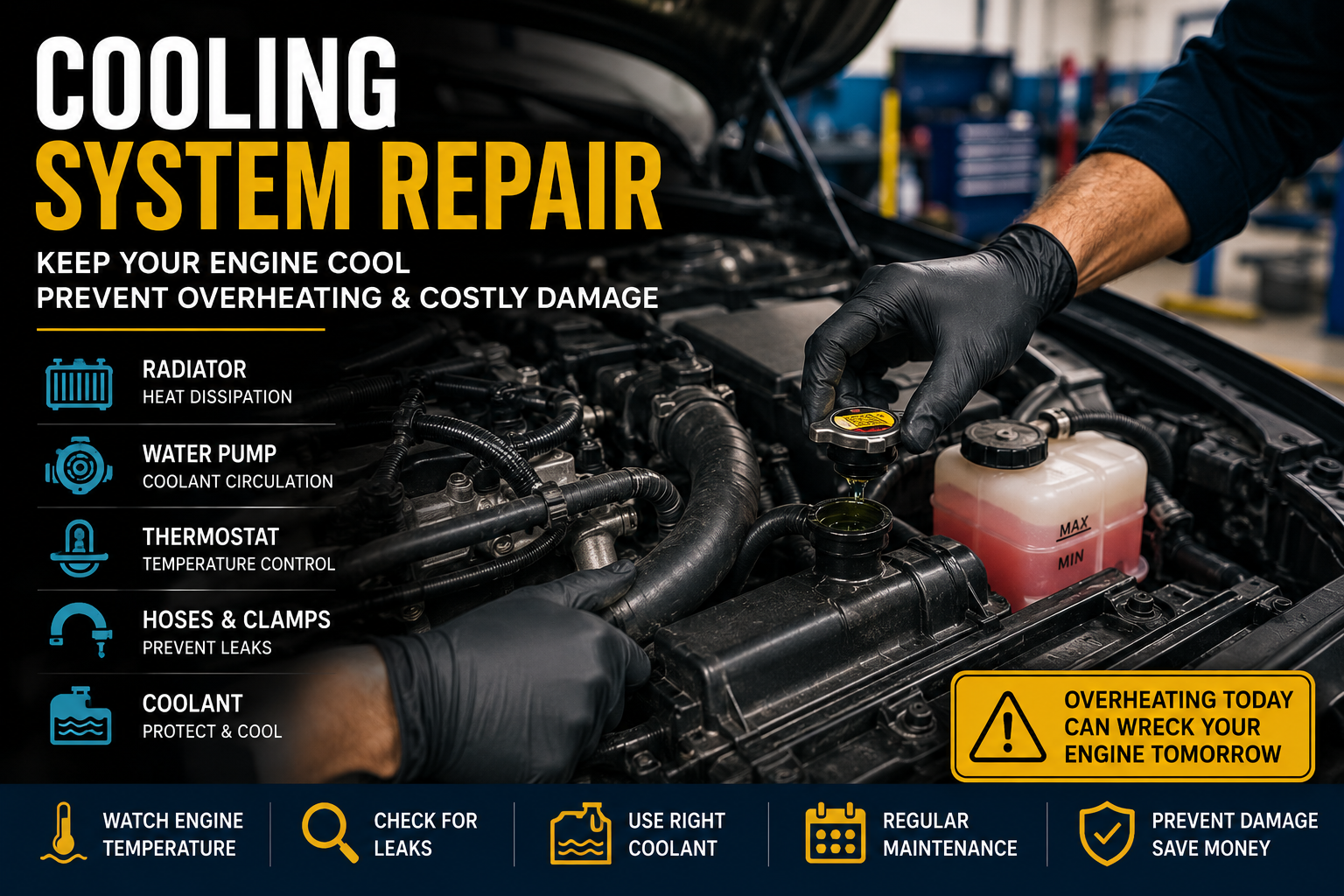
The main components include:
- Radiator
- Water pump
- Thermostat
- Radiator fan
- Coolant reservoir
- Radiator hoses
- Heater core
- Coolant (antifreeze)
Each part has a specific job, and when one fails, the entire system can struggle to keep the engine cool.
Common Signs Your Cooling System Needs Repair
Most vehicles provide warning signs before overheating completely.
Here are some of the most common symptoms.
Engine Temperature Is Rising
If the temperature gauge consistently moves higher than normal, don’t assume it will fix itself.
An overheating engine can warp cylinder heads, damage head gaskets, and even ruin the engine block.
Coolant Leaking Under the Vehicle
Bright green, orange, pink, or yellow fluid under your car usually points to a coolant leak.
Leaks often come from:
- Radiator hoses
- Radiator
- Water pump
- Hose clamps
- Coolant reservoir
Even a slow leak can eventually leave the system too low on coolant.
Steam Coming From Under the Hood
Steam usually means coolant is boiling because the engine has become too hot.
If this happens:
- Pull over safely.
- Turn the engine off.
- Allow it to cool completely.
- Never remove the radiator cap while the engine is hot.
Opening it too soon can cause serious burns from pressurized coolant.
Low Coolant Warning Light
Modern vehicles often monitor coolant levels.
If the warning light appears, check the reservoir once the engine has cooled.
Repeatedly adding coolant without fixing the leak only delays the real repair.
Heater Stops Producing Warm Air
This one surprises many drivers.
Your cabin heater relies on hot coolant.
If the heater suddenly blows cold air during winter, it may indicate:
- Low coolant
- Air trapped in the system
- Thermostat problems
- Water pump issues
The Most Common Cooling System Repairs
Radiator Replacement
The radiator removes heat from the coolant before it returns to the engine.
Over time it can develop:
- Corrosion
- Cracks
- Internal blockages
- Damaged cooling fins
Replacing a leaking radiator prevents overheating and restores proper cooling performance.
Thermostat Replacement
The thermostat controls coolant flow.
If it sticks closed, coolant cannot circulate properly.
Typical symptoms include:
- Engine overheating
- Temperature fluctuations
- Poor heater performance
Fortunately, thermostat replacement is usually one of the more affordable cooling system repairs.
Water Pump Repair
The water pump continuously circulates coolant through the engine.
When it begins to fail, you may notice:
- Coolant leaks
- Grinding noises
- Overheating
- Coolant stains around the pump
Ignoring a failing water pump can quickly lead to serious engine damage.
Radiator Hose Replacement
Rubber hoses age just like tires.
Over time they become:
- Brittle
- Soft
- Cracked
- Swollen
Replacing worn hoses is inexpensive compared to repairing an overheated engine.
Cooling Fan Repair
When your car sits in traffic, the radiator fan helps pull air through the radiator.
If the fan motor or relay fails, temperatures can climb quickly while idling.
My Approach When a Car Starts Overheating
Whenever someone asks what to do when an engine begins running hot, I always recommend staying calm and following a simple process.
Step 1: Watch the Temperature Gauge
Don’t ignore sudden changes.
A rising temperature gauge is usually your first warning.
Step 2: Pull Over Safely
If the engine starts overheating:
- Turn off the air conditioning.
- Turn on the heater if necessary to help remove engine heat.
- Pull over as soon as it’s safe.
Continuing to drive can multiply repair costs.
Step 3: Let the Engine Cool
Patience matters.
Opening the radiator cap immediately is dangerous because the cooling system remains under pressure.
Wait until everything has cooled completely.
Step 4: Check Coolant Levels
After cooling:
- Inspect the coolant reservoir.
- Look for visible leaks.
- Examine hoses for cracks.
Never mix different coolant types unless recommended by the vehicle manufacturer.
Step 5: Schedule Professional Repairs
Some cooling system issues are simple.
Others require pressure testing, diagnostic equipment, or replacement parts.
If the problem isn’t obvious, have a qualified mechanic inspect the system before driving long distances again.
Mistakes That Can Make Cooling System Problems Worse
Over the years, I’ve noticed that many expensive repairs start with avoidable mistakes.
Ignoring Small Coolant Leaks
Drivers often top off coolant repeatedly instead of fixing the source.
Eventually, the leak becomes much larger.
Using Plain Water Instead of Coolant
Water may seem like a quick solution, but it doesn’t provide the corrosion protection or boiling point needed for modern engines.
Always use the correct coolant recommended by the manufacturer.
Mixing Different Coolants
Not every coolant is compatible.
Mixing different formulations can reduce cooling efficiency and create sludge inside the system.
Delaying Repairs
An overheating engine isn’t something to “watch for a few days.”
Immediate diagnosis usually saves money.
Forgetting Regular Coolant Changes
Coolant breaks down over time.
Old coolant loses its protective properties and may allow corrosion inside the cooling system.
Following your maintenance schedule helps prevent future repairs.
A Practical Example
One driver noticed that the temperature gauge would rise only while sitting in traffic.
On the highway, everything seemed normal.
The issue turned out to be a failed radiator cooling fan.
At higher speeds, airflow naturally cooled the radiator.
When stopped, there wasn’t enough airflow, causing the engine to overheat.
Replacing the cooling fan solved the problem before any engine damage occurred.
Situations like this show why identifying the exact cause is far more important than simply adding more coolant.
Simple Ways to Prevent Cooling System Repairs
Preventive maintenance is always less expensive than emergency repairs.
Here are a few habits worth following:
- Check coolant levels every month.
- Inspect hoses for cracks and swelling.
- Replace coolant according to the owner’s manual.
- Watch the temperature gauge while driving.
- Repair leaks as soon as they’re discovered.
- Keep the radiator clean and free of debris.
- Replace worn hose clamps when necessary.
- Have the cooling system inspected during routine servicing.
A few minutes of maintenance can help avoid hours of downtime and costly engine repairs.
Why Cooling System Maintenance Is Worth It
Many drivers focus on oil changes and tire rotations but rarely think about the cooling system until something goes wrong.
The reality is that your engine depends on proper cooling every second it’s running. A healthy radiator, water pump, thermostat, and coolant supply all work together to protect one of the most expensive parts of your vehicle.
Taking care of these components isn’t just about preventing breakdowns—it’s about extending engine life, improving reliability, and driving with confidence.
If your car starts showing signs of overheating or coolant loss, don’t wait for the problem to get worse. A quick inspection today could prevent a major repair tomorrow, saving you money and keeping your vehicle safely on the road for years to come.