

It Happened on the One Morning I Couldn’t Be Late
Almost every driver has a story like this.
You walk outside, coffee in one hand and your car keys in the other. You get in, turn the key—or press the start button—and instead of the engine roaring to life, you hear nothing but a slow click… click… click.
Your first thought is usually, “Maybe it’ll start if I try again.”
It doesn’t.
A dead battery has a way of choosing the worst possible moment. Whether you’re heading to work, taking the kids to school, or leaving for a road trip, battery failure rarely gives you much warning.
The good news is that most battery problems can be prevented with a little attention and regular maintenance. Even when replacement becomes necessary, understanding what to expect makes the process much less stressful.
If you’re wondering when it’s time to replace your car battery, how to spot the warning signs, and how to avoid getting stranded, this guide will walk you through everything you need to know.
Why Your Car Battery Matters
Most people think the battery’s only job is to start the engine.
It actually does much more.
Your battery supplies power to:
- The starter motor
- Dashboard electronics
- Interior and exterior lights
- Infotainment system
- Power windows
- Door locks
- Engine control modules
- Safety systems
Without a healthy battery, many of these systems won’t function properly—even if the engine itself is in good condition.
How Long Does a Car Battery Last?
Most modern car batteries last between 3 and 5 years.
However, battery life depends on several factors:
- Climate
- Driving habits
- Vehicle type
- Battery quality
- Electrical load
- Maintenance
Hot weather often shortens battery life because heat accelerates internal chemical wear, while extremely cold temperatures reduce the battery’s ability to produce power.
Signs It’s Time for a Battery Replacement
Most batteries don’t fail instantly. They usually show warning signs first.
Slow Engine Cranking
This is one of the earliest symptoms.
If the engine turns over more slowly than usual before starting, your battery may be losing its charge capacity.
Dashboard Battery Warning Light
If the battery light appears while driving, don’t ignore it.
Although it sometimes indicates a charging system issue rather than the battery itself, it should always be inspected promptly.
Dim Headlights
Weak batteries often cause headlights to appear noticeably dim, especially when starting the vehicle.
Electrical Accessories Acting Strange
You may notice:
- Slow power windows
- Flickering dashboard lights
- Radio resetting
- Infotainment glitches
These issues can point to low battery voltage.
Frequent Jump Starts
If you’re reaching for jumper cables every few weeks, the battery has probably reached the end of its service life.
Jump-starting repeatedly only delays the inevitable.
Why Car Batteries Fail
Battery failure isn’t always caused by age.
Several factors can shorten battery life.
Leaving Lights On
Even something as simple as an interior light left on overnight can completely discharge a battery.
Short Trips
Frequent short drives don’t give the alternator enough time to fully recharge the battery.
Over time, this reduces battery performance.
Extreme Weather
Very hot summers and freezing winters both place additional stress on automotive batteries.
Corroded Battery Terminals
White or blue corrosion around the battery terminals restricts electrical flow.
Cleaning the terminals periodically helps maintain reliable connections.
Faulty Charging System
Sometimes the battery isn’t the problem.
A failing alternator may not recharge it properly, causing repeated dead battery symptoms.
How Battery Replacement Works
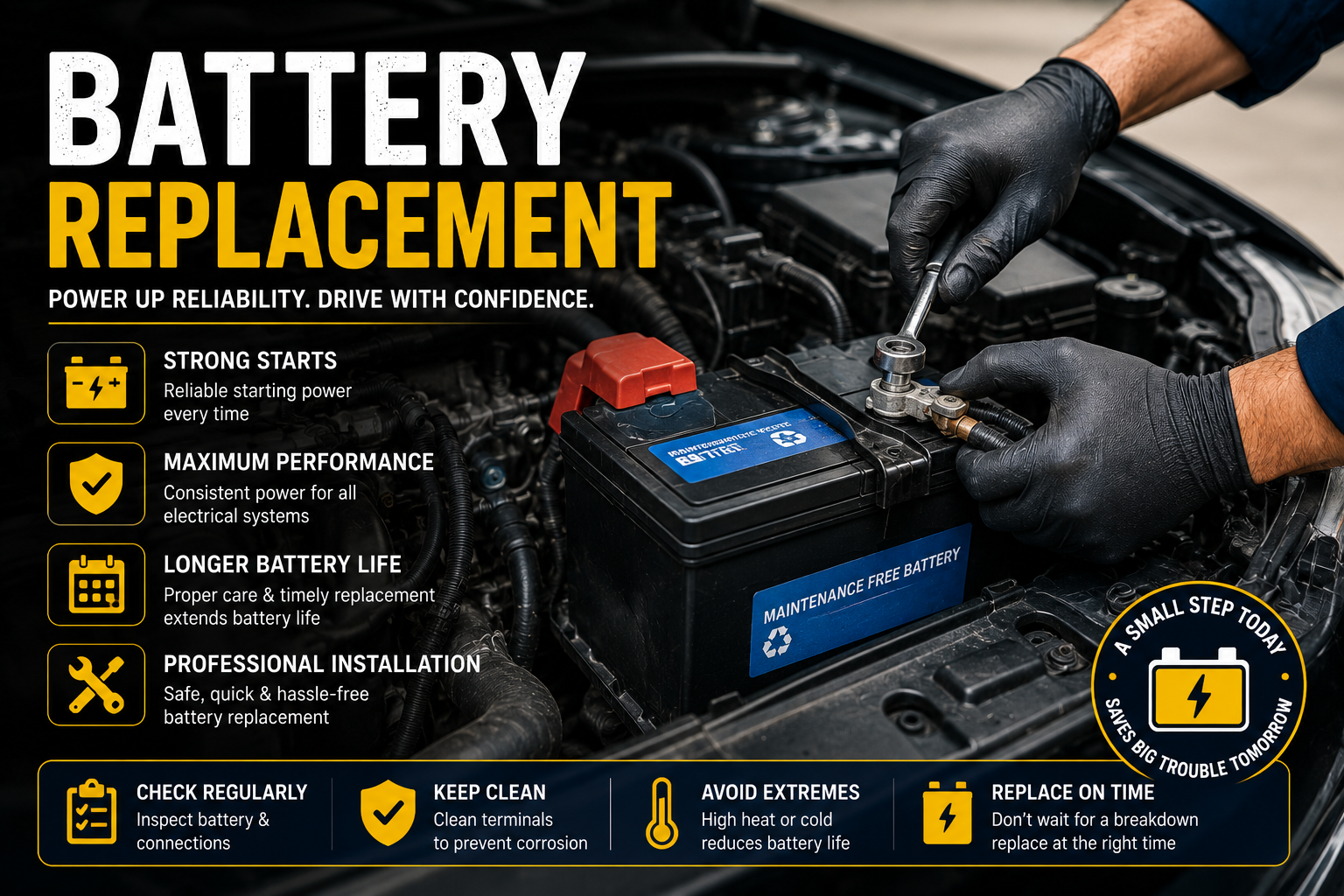
Replacing a car battery is usually a straightforward process, but doing it correctly matters.
Step 1: Test the Battery
Before buying a new battery, have the existing one tested.
Many automotive parts stores and repair shops offer battery testing free of charge.
Sometimes the battery is healthy, and the real issue lies elsewhere.
Step 2: Choose the Correct Battery
Not all batteries fit every vehicle.
When selecting a replacement, check:
- Battery group size
- Cold Cranking Amps (CCA)
- Reserve capacity
- Terminal layout
Using the correct specifications ensures reliable starting performance.
Step 3: Disconnect the Old Battery Safely
If replacing the battery yourself:
- Turn the engine off.
- Remove the negative terminal first.
- Disconnect the positive terminal.
- Remove the battery hold-down bracket.
- Carefully lift the battery out.
Car batteries are heavier than many people expect, often weighing between 30 and 50 pounds.
Step 4: Clean the Battery Tray
Before installing the new battery:
- Remove corrosion.
- Clean terminal connectors.
- Inspect cables for damage.
Good electrical connections help maximize battery life.
Step 5: Install the New Battery
Reverse the removal process:
- Secure the battery.
- Connect the positive terminal first.
- Connect the negative terminal last.
- Tighten all connections properly.
Once installed, start the vehicle and verify that everything operates normally.
A Practical Example
A neighbor once noticed that her SUV occasionally hesitated before starting, especially on cold mornings.
She assumed it was just the weather.
Over the next few weeks, the hesitation became worse until one morning the engine wouldn’t start at all.
The battery tested below its recommended voltage and was replaced.
The vehicle started immediately afterward, and the problem disappeared completely.
Small warning signs like slow cranking are often the earliest clues that replacement is approaching.
Common Battery Replacement Mistakes
Many drivers unintentionally shorten battery life by making a few avoidable mistakes.
Buying the Cheapest Battery
Lower-priced batteries may save money initially but often have shorter warranties and lower durability.
Choosing a reputable battery with the correct specifications usually provides better long-term value.
Ignoring Corrosion
Corrosion increases electrical resistance and reduces charging efficiency.
Cleaning battery terminals periodically helps maintain strong electrical connections.
Forgetting to Secure the Battery
A loose battery can vibrate while driving, damaging internal components and shortening its lifespan.
Always ensure it’s firmly secured.
Replacing the Battery Without Testing the Charging System
If the alternator is faulty, even a brand-new battery may go dead within days.
Whenever a battery fails unexpectedly, it’s wise to inspect the charging system as well.
Waiting Until the Battery Dies Completely
Replacing a battery after it begins showing warning signs is much more convenient than dealing with a breakdown in a parking lot or on the roadside.
Tips to Extend Battery Life
Simple habits can help your battery last longer.
- Drive your vehicle regularly.
- Avoid frequent short trips whenever possible.
- Keep battery terminals clean.
- Turn off lights before leaving the vehicle.
- Test the battery annually after it reaches three years of age.
- Secure the battery properly.
- Inspect cables during routine maintenance.
- Replace damaged terminal connectors promptly.
- Protect the battery from excessive heat whenever possible.
These small maintenance habits reduce the chances of unexpected failure.
When Should You Replace Instead of Recharge?
Many people ask whether they should recharge a weak battery or simply replace it.
A recharge may be enough if:
- The battery was accidentally drained.
- It’s relatively new.
- It passes a battery load test.
Replacement is usually the better choice if:
- The battery is over four years old.
- It repeatedly goes dead.
- It fails testing.
- The case is swollen or damaged.
- There’s excessive corrosion or leaking.
Knowing the difference can save both money and frustration.
Final Thoughts
A car battery is easy to forget about—until the day it refuses to start your vehicle. By paying attention to early warning signs like slow cranking, dim lights, or frequent jump starts, you can replace the battery before it leaves you stranded.
Routine battery checks, clean terminals, and choosing the correct replacement go a long way toward improving reliability. It’s one of the simplest maintenance tasks you can stay ahead of, and doing so can save you time, stress, and the inconvenience of an unexpected breakdown.
Treat your battery as part of your regular maintenance routine, and your car will be much more likely to start when you need it most.